Showing posts with label World War II. Show all posts

Friday, October 10, 2014

Movie: In a Corner of this World (この世界の片隅に )


"If I can die with the memory of the person I love, I'm satisfied."
好きな人の思い出しと死にしたら、本望じゃ。


I have always loved Japanese drama movies and I always cry every time the last scene fades to black. My senpai and good teacher Ms. Pauline Mangulabnan shared  me this movie "In a Corner of this World" and indeed it was a heartbreaking, heartwarming and inspirational film. I remembered other Japanese movies with the theme of World War II like Studio Ghibli's Grave of the Fireflies and Letters from Iwo Jima and they all made me cry. 


The cinematography of the film is equally sublime and stunningly unique. The first scene that pops out in the movie is a moving cart with a boy and a girl inside. The boy said it was a kidnapper's cage and told the little girl that once it stops they would escape together. Fade to black with the next scene of a woman, whose name was Suzu in bed with his husband Shusaku, the same little boy in the first scene, and they held hands. Then one will realize that both scenes are merely dreams when the third scene showed Suzu in bed, with bandages in her head. As she lifts her right arm, she realizes that her hand is gone from the time bomb that exploded during those times in war. 

Hiroshima. 1930s. Then comes the flashback when Suzu was to meet the man she would marry in a tradition called omiai (arranged marriage). Shusaku, the man she would marry, is part of the military corps. When they finally met, Shusaku said that he already knows Suzu by her mole, with Suzu clueless as to where they could have met. Suzu also met her longtime friend Tetsu and drew him a picture of him as a child and the ocean, the time when Tetsu's brother was killed in the navy war. 

Everything seems normal at first: as a housewife, Suzu worked hard in the house and served her husband well. During these times her husband was working in the military and they both lived in her parents' house, while her elder sister visits them with her daughter occasionally. A significant scene appears when Suzu got lost in the village and met Rin-san, a geisha who was kind and sweet. When she found out that Suzu is good at drawing, she made her draw a picture of a watermelon and caramel. Eventually they bid each other goodbye. 

A conflict arises when Suzu found out that her husband Shusaku seemed to know Rin-san as a customer, and becomes cold to him for a while. Tetsu visited Suzu and gave her an omiyage (present) of a bird's feather and said that it might be the last time they meet each other.

Before the war worsened, spring passed by and Rin and Suzu met again. They shared stories and Rin left Suzu with inspirational messages about the war.
Just because you're lacking a little something, doesn't mean there's no place for you in this world." (だれでもちいとたらもんがあるくらいで、この世界に場所はなくなら。)

The war came like a thunder afterwards and time bombs were scattered everywhere. Shusaku was promoted as a military commander and would be away for three whole months. Suzu endured this while taking care of her niece, Harumi but ended up getting blown by a time bomb hidden in the bushes and a fence, killing Harumi and taking her right hand. 

A part of Suzu was lost during that time because everything she did--cleaning the house, making Harumi a pouch, sketching drawings for her friend Tetsu and Rin and hugging her husband Shusaku became impossible without her right hand. She decided to wander off alone because she still could not accept the fact that her loved ones died and still they lost the war. Shusaku found her and invited her to come home. She said that her home could have been the fence where the time bomb was and then she would be with her loved ones--Harumi, Tetsu and Rin.

"I'll be your home. I hope it would be fine for you," Shusaku said in assurance.

In the end, Suzu returned home and finally accepted the realities of life during the war, and thanked her husband, who would always find her because of her mole, even during that time that she got lost when she was a kid and Shusaku helped her find her way home.

Such Japanese drama movies always make me cry and, and as a Linguistics student who studies Japanese,  appreciate the Japanese culture better. I have noticed that the characters use a Japanese dialect compared to the Japanese used in the cities. The general theme of the movie, I believe is finding one's place in the world even if he is nowhere near perfect, and moving on so that one can face the future with confidence and hope.


Tuesday, July 12, 2011

Grave of the Fireflies: Saving the fruit drop


Where will you be… when she dies?

The war was not the story. It may have been the headlines in the papers or the unforgettable event written in the history textbooks. For a young boy, his sister’s death was the unforgettable event. Isao Takahata’s  Grave of the Fireflies (1988, a Hayao Miyazaki film) tells the tragic tale of Seita (Tsutomu Tatsumi) and his younger sister surviving World War II, and how they died with it.

The gloomy atmosphere focused on Seita: filthy, thin as stick, dying as he leans on a post at the train station. In the distance, his spirit and his sister’s watched him die, and both rode in a train to recall their miserable life during the war.

The sound of sirens and the words “air raid” were already familiar to his ears, as Seita, along with his sister Setsuko (Ayano Shiraishi) and their ill mother (Yoshiko Shinohara) prepared to store food underground and take cover to the shelter. However they parted ways with Seita and Setsuko struggling to reach for the shelter because of the chaos and had to improvise. When everything was back to normal, the children found out their mother was severely wounded with very little chance of survival.

The worms cannibalizing on his mothers’ dead flesh and the way she was thrown into the sea of fire for cremation was a nightmare Seita knew very well to be too much for his younger sister. Staying in their aunt’s house for a while, the boy tried very hard to divert Setsuko’s attention to forget their mom by bringing her to the beach, treating her with her favourite fruit drop and teaching her how to catch fireflies.

With their aunt taking advantage of their parents’ wealth, both decided to live off in an abandoned cave far from the city. At first they enjoyed improving the place but eventually struggled with food and water scarcity. Setsuko developed severe diarrhea because of the river water and malnutrition. Their mom had left them money in the back, but was of no use during the war because no one else would want to trade their goods.

Seita proved his love for his sister, giving up the noble honor as a Japanese citizen and as a son of a soldier by stealing goods whenever people run to the shelters during the air raids.

When the war was over and Seita was withdrawing money from the bank, he found out the Japanese lost and realized their dad had died, too. Left with almost nothing, he ran back to her dying sister and bought her lots of food. But it was too late. “She never woke up,” and now the young boy had to carry two boxes of ashes.

He eventually left the cave with his sister’s ashes in the fruit drop can, and died.

The movie always makes me cry even when I think about it, especially in the scene when Setsuko buried the fireflies they once used as lights for their cave one night, and asked Seita, “Why do fireflies have to die so soon?”

Wednesday, December 22, 2010

DECEPTION 101: Just how far can man lie and betray to invent world wars?


REMEMBERING PEARL HARBOR
mugshot of Pearl Harbor bombing
My high school textbooks couldn't really say that much.


One cannot really blame the writers and publishers, taking into account that our history lessons years ago should only focus on local exploits and adversities. I must admit I'm not a huge fan of History, but I believe I did my homework better now.


Staring at the young Ben Affleck in the 2001 film Pearl Harbor, I learned finer details on the historical bombing of the "Gibraltar of the Pacific", specifically the bogus peace talks between US and Japan. A sent message in a bottle once marked newspaper headlines with "Peace talks hopeful", but then after conned "strict radio silence" issues from Japan preventing US to be war-updated, both fascist nations ended up being too surprised at the aftermath of the bombing.


However, the seven-hour ambush then provoking Uncle Sam to actively participate in World War II is not the spotlight given this modern era. At that time the media coudn't boil any more "hotter angles and stories" days after Oahu, Hawaii was literally charred into ashes. Not until the unwritten speculations of then President Franklin Roosevelt's "foreknowledge" about the imminent Japanese blitzkrieg.


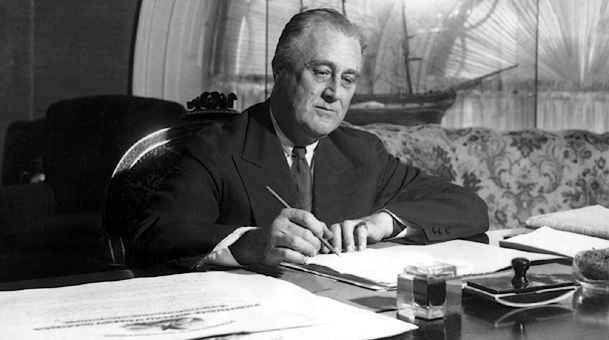
Franklin D. Roosevelt: Did FDR deliberately allow such attack to enter into war?
www.claremontmckenna.edu
THE US DECEPTION


What if FDR had designed better plans? From an article by Robert Stinnett (Dec. 8, 1941), FDR called on an informal meeting with two people on cold beer and midnight sandwiches: CBS radioman Edward Murrow and Coordinator of Information William "Wild Bill" Donovan. The conversation became clouded with FDR's indirect claim on his foreknowledge of a looming Japanese attack, and with no serious actions ordered whatsoever.


What was FDR's plans? Belying with his anger and quick manifesto of a war against Japan all seemed convincing enough. Deceptions piled up as previous accounts claiming the US still hadn't cracked the Japanese military codes for early warning was proven theory; so did the "strict radio silence" of the enemy fleet the US government had blamed. One thing was clear though: the President knew beforehand.
Mapping the bombing: The premeditated attack at Oahu, Hawaii
JAPAN'S DECEPTION


The tax payers of the Land of the Rising Sun were as equally smart. In early September 1941 while the would-be-comfort-women still chatted by the river washing clothes, the militaristic Japanese had completely conceived its plan to conquer the Malaya, the Philippines and the Netherlands of East Indies, wisely coordinated with a Big Bang exhibition at Pearl Harbor.


Japan thought better to cripple the heroic Uncle Sam firsthand to smoothly take over the Pacific without interference. It did make sure America would be severely amputated.


Its dirty game specially included fake peace talks towards America weeks before the historical Pacific war. This was why President Roosevelt called it the "Day of Infamy"--the word was exactly "ambush" and "deception". Now I believe I must've slept over our World History lessons a year ago, but I can say I hadn't read such detail on the rented textbooks. 


HISTORY IS ALL ABOUT NUMBERS


To some extent, maybe it was all "for the record". If deception was so sweet and psychologically fulfilling, the statistics on and the unbearable sight of the wounded, the dying and the dead weren't: with 2 896 Navy and Marine casualties plus 57 innocent lives, and the sight of trapped crewmen with oil-smudged hands poking at the small holes of the sinking ships and then dying like wilted flowers. Families will forever ask why.


On the contrary, I believe wars brought by deception, nationalism, etc. are actually the eye-catching black-and-white photos of the history books. If not for wars, historical names wouldn't have been written, memorized, remembered. Places across the globe wouldn't have become tourist spots (w/c boost economical status), heritage sites, museums, field trip itineraries. The new generation wouldn't have been inspired, motivated, challenged, curious and aware.


HITLER OF GERMANY
http://massthink.wordpress.com 

MUSSOLINI OF ITALY
http://faculty-web.at.northwestern.edu
Much as we pretend to loathe and curse Hitler and Marcos and Mussolini for their insanity and overreacted fascism (where in fact we simply don't care), we never knew their nature. I was taught by Ms. Josephine Bonsol to understand such people's nature, and told us to stop being jologs for cursing the villains of world history. 


Why was Hitler so obsessed with Germany and its purity in race? Why was Japan addicted to collecting colonies and war gears? Why was Marcos deeply in love with dictatorship? I was taught in was simply not about the glorious crown and the intoxicating wealth and position: it must be on their childhood principles on pure leadership, the people influencing them and their history lineage.


World wars were and will always be carved not by people, but by deception, aggression, competition, and more likely out of one's itching goal to end a boorish dull day in the world.
Related Posts Plugin for WordPress, Blogger...