Showing posts with label prison. Show all posts

Friday, September 05, 2014

Miracle in Cell No. 7: The Sailor Moon bag


My beloved Linguistics adviser Mr. Louward Zubiri, who is an expert in negation, would always say, "If there is no negation in language, all means of communication will crash." Sometimes saying no leads you to the truth, and sometimes saying yes leads you to save your daughter.

My stomachache didn't stop me from watching the movie Miracle in Cell No. 7, which was recommended by my good friend Mark Borris Aldonza. At first I didn't know whether I was crying from my stomachache or from the movie itself. I couldn't laugh at the funny parts because my innards contract but I managed to finish the movie wiping tears from my eyes.

The movie revolves around an intellectually challenged father Yong-gu (Ryu Seung-Ryong) and his young daughter Yesung (). It was at first like the movie I am Sam where the father behaves in a childish manner and a daughter who simply loves his father for who he is. The conflict first began when Yesung's favorite Sailor Moon bag was already sold out in an exclusive store, where the last one was bought by the daughter of a powerful policeman in their place. The next day, the daughter of the policeman looked for Yesung's father and told him she found another store that sells the bag. However things took a turn for the worst when the child suddenly slipped through thin ice and a brick fell on her head, cracking her skull and ultimately killing her. Yesung's father, who at  the time was trying to resuscitate the dead child by conducting CPA, was found by an old woman and she had mistaken it for rape and murder. The police crowded and exaggerated the scene--they abused the intellectually challenged father and fooled him into confessing that he did rape and murder the child of the powerful policeman. 

He was given a lifetime sentence to jail, where he met a number of inmates who first alienated him for his fabricated crime case. He was able to gain their trust when one day the leader of the pack and gangster was attempted to be killed by another inmate and Yong-gu, dubbed 5438 (his prisoner number) saved his life. As the leader of his gang before he was jailed, Sin Bong-sik paid his thanks by doing whatever Yong-gu wants; that is, to see his daughter Yesung. Doing the impossible, the group was able to sneak out Yong-gu's daughter using the daily ration of bread in the prison cells. However they were not able to return his daughter, who was already living in an orphanage on time and she was able to stay and hide with them in Cell No. 7. They were found out by the police two days after and Yong-gu was sentenced to the isolation room as punishment.


Yesung, after the incident, did not eat and became pale and sickly in the orphanage. The head police chief visited her and realized that the child just wanted to be with his father. And so after taking a vacation leave, he presented another box of bread for Cell No. 7, only this time, Yesung was in place of the breads. The police chief and the guards allowed Yesung to stay with her father in the prison as long as she liked. The police chief, who was also saved by Yong-gu once when an inmate set fire in the prison, started to get curious with his case and re-investigated it. During Yesung's stay in the prison, the other inmates also questioned what really happened that afternoon when the daughter of the powerful policeman got killed. They were able to deduce that indeed it was not Yong-gu who killed the child, but the thin ice and the brick that cracked her skull. Yong-gu's trial was looming, and all of his friend-inmates started their work on prepping Yong-gu before he is presented in front of the judge. They did this with dedication until it was time for the trial. However, another conflict surfaced when the powerful policeman threatened Yong-gu that the same accident would happen to Yesung if he tells the judge that it was not his fault.

"Did you rape and kill the child using a brick?"

Silence. The prosecutor repeated the same question for the nth time.

"Did you rape and kill the child using a brick?"

"Yes I did. I did kill the child."
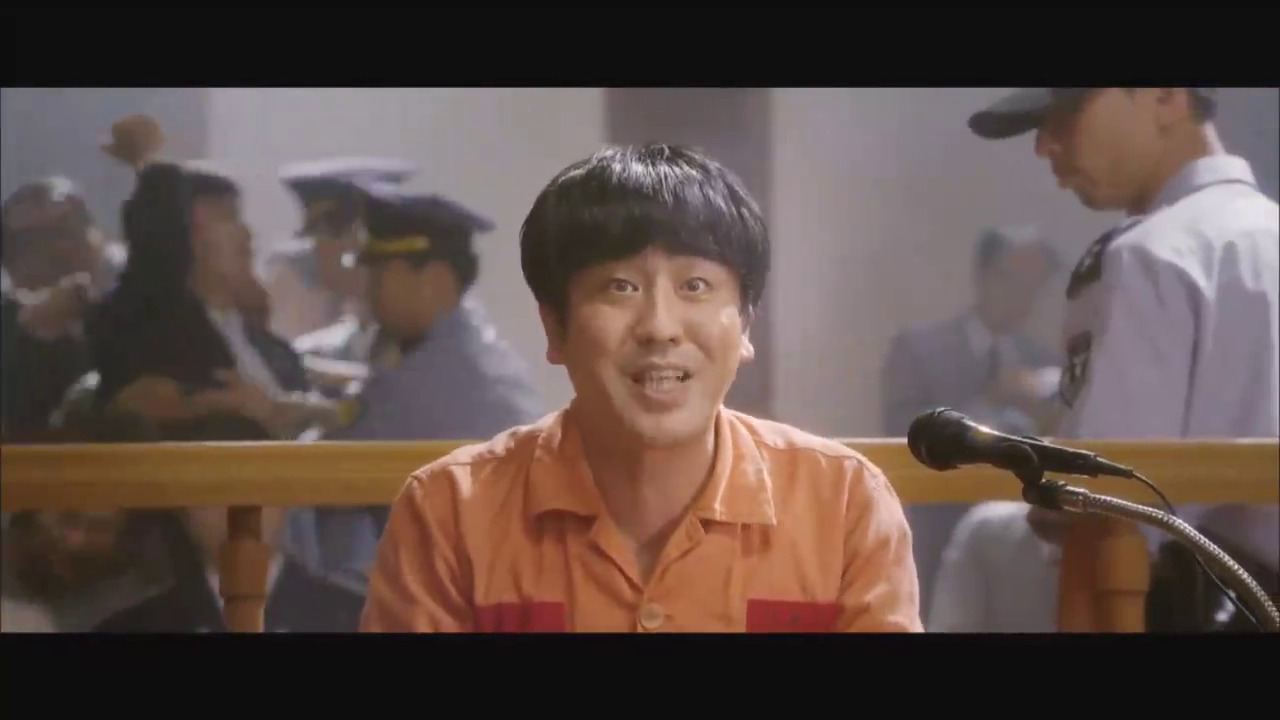

Everyone was shocked and Yesung cried beside her teacher and the chief policeman. Yong-gu was sentenced to death on December 23, and the inmates, the chief policeman and Yesung made the best of their time which already had a deadline. Yong-gu's friends could not accept the result of the trial and tried to escape Yong-gu by building a large hot air balloon during Christmas just before his death sentence, but failed when the rope that was attached to the balloon got stuck in the barbed wires of the prison.


Yesung, who was already under the care of the chief policeman, said her last goodbye to his father on December 23, and before both of them knew it, they could not accept what had happened, that Yong-gu would take the electric chair and that Yesung would grow up without his real father. 

Years later, Yesung, who was now a lawyer, re-investigated the case of his father and was able to successfully win the case even though his beloved father was already sentenced to death many years ago. 

I cried over how Yesung and Yong-gu changed the world of Yong-gu's fellow inmates--the leader-gangster was able to face his fear and took the courage to learn how to read and write. I also cried over how Yesung was able to borrow a phone from his friend and lent it to one of the inmates who just got his wife a baby girl. I didn't know whether I should laugh or cry when they were searching for a signal in Cell No. 7 and finally found it near the toilet.

 The first scene of the yellow balloon that got stuck in the barbed wire that the lawyer Yesung first saw and the last scene where the yellow balloon became the hot air balloon where Yong-gu and the young Yesung finally waved her goodbye was the most dramatic and spine-chilling images I've ever seen in movies so far. In the end, Yesung was able to forgive her father and bade her last goodbye.

Sunday, January 16, 2011

The walls, the cellmate, and the chair

Part II
Worlds apart: same prison, different hellholes


True, we take a lot of things for granted, until we learn to look farther in the long run, and witness other people being deprived of the things we once thought everybody has.


1. Family, Friends, Foes


The father's tears: Lincoln behind bars with his son LJ
Maybe the second dumbest thing a villain can plan is to not have a family. It actually makes little sense when bad people say family will only be a distraction, an interference, a burden. From quite a number of movies I watched, I noticed family always serves as the best motivator and the only reason to commit the most unimaginable crime that is yet to be written in the Crime Library archives.


FAMILY: Law-abiding Citizen: After a father saw his wife and little girl raped and tortured to death, he seeks for "justice the system cannot obviously provide", and comes back for the worst revenge no one can believe to be possible: killing people with his own hands--even if he's behind bars.


John Q.: Not one father can accept he will bury his son long before his son buries him. As his son was diagnosed with cardiac arrest, he almost sold his house just to pay for the hospital bills after his insurance company won't pay for it. Getting a job and waiting for the monthly salary was not an option, and the last desperate resort came to John Q.'s mind: take a hospital hostage, until the apathetic doctors perform the surgery spelling both the loving father's and the son's life.


The same theme goes for Prison Break: Lincoln was all Michael had in the world, and the only family who stayed despite their "nature and nurture" differences. For the structural engineer, enduring the laser for his deceiving Sistine Chapel tattoos, getting his toes cut and fabricating another crime to get incarcerated for the second time instead were all simply "crosses to bear". As long as his brother escapes the electric chair he obviously did not deserve, Michael was always more than ready to suffer and accept the consequences.
The "papi" who never left: Sucre and Michael digging a hole for the break-in (series four)


FRIENDS: Measuring how far a friend would go also became one of the series' moral themes. While on the run, a lot of people Michael once thought  were "friends and allies" came and went even as fast as the speed of light. But amidst his efforts to "establish trust", two people remained: Fernando Sucre (Amaury Nolasco) and Alexander Mahone (William Fichtner).


This part also taught how friends should understand each other even without words. A lot of surprises shook the team in the third and fourth series when Plan A didn't go out so well, then Michael and Mahone would look at each other with the understanding of "Let's do plan B."
The backstabber: Don Self, extreme right (series four)


FOES: At most times our protagonists had no choice but to trust their original foes because a new set of villains is on the move. But the foe in this story is actually defined as those people too smart enough to impersonate as allies, then would stab you at the back after he got what he wanted from you.


In the end, those old foes even became part of Michael's "plan C's", and somehow offered the "luck" for the team when they needed it the most.


2. Freedom


Let's admit we look at it as more boring in real life than in meaning. Of course, it only gets boring when we don't want to get another dictionary to look for its definition other than "being liberated from our strict parents".


But for a bunch of paranoid fugitives, freedom was everything.


The team's hunger for liberty from being wrongfully convicted and the itch to come home were most seen in series one: the breaking out, and series four: the breaking in. A lot of strong temptations also clouded their minds in the long run (like when Sucre and Bellick were to stand guard and wait, and Bellick tempted Sucre to drive and escape from the team instead).


But the focus on closing the off-the-books deal and seeing official papers of emancipation never faded in Michael's "tumored" brain. At one point he condemned Lincoln, and even his girlfriend Sara about the latters' deal working with the Company in exhange of saving Michael's life. He was at the brink of death after being diagnosed with brain tumor, and the only way to save him was to bring him to special Company doctors.


Michael also taught me to look at the long-term consequences of one's actions, and to not linger and be contented much on the seemingly comforting achievements at present. Since series one, he only saw two things at the farthest end of the grim tunnel: freedom and family. All through out these two kept him going.


3. The art of being smarter


Michael scammed them all.


It must truly be an insulting, and probably the brightest plan to deceive your team: you tag them along at first, then eventually dump them to your traphole, because after all, other members of your team did not certainly deserve rightful freedom.


Adopting the practical and realistic principles of a communist mind, this situation actually highlights the one being smarter; the one who knows the plan. After all, if you're a mere soldier of the army, you would most likely stay either as the contractor, the bait, the additional burden, or the dumb ugly duckling desperately keeping up with Mother Goose.


It probably looked like convicts walking in a pitch black tunnel and they even had no idea what's waiting for them on the other side. But the cruelty of each one's survival was not much of a sympathy issue: it was mainly about trying to be smarter than everybody else to escape as far as the Pacific. And not even that, it was more about being the mastermind of the escape plan.


I remember my mentor Ms. Josephine Bonsol giving a lecture about being "parrots" and riding along the "bandwagon" of the social community. I've finally understood what she meant when she indirectly taught us about the consequences of always following our friends' whereabouts and scandals and routines, and idly wanting to stay as the "buyer" and not the "innovator".


For eight fugitives on the run, with husky but swift guards and dogs at their heels, they had no choice but to rely their trust to the structural engineer who started it all. Somehow it's a very dangerous thing to believe a man with a complicated and mysterious mind; it's like jumping into hell not knowing what's waiting for you below.


We may never know how worse the scenario would get when we continue to be mimes and parrots because we "think" it's the right thing to do. After all, there is no such term as the "right thing"; it only becomes right according to us and according to what the majority says about it.

Wednesday, January 12, 2011

The walls, the cellmate, and the chair

First of three parts
The world behind bars


Home and family will always be the last journey.


He became America's most wanted fugitive for one reason: to save his only brother he never thought would be a stranger after all.


Paul T. Scheuring's Prison Break series generously opened me to the world behind bars, where convicts haunt and hunt each other, play basketball involving a deal of chomping down the losing team's lunch, riot at most times and replace the guards' horrid and loud "night head counts". All these are considered as norms of the prison walls, while a certain "Fox River Eight" worked at Prison Industries, dug an escape tunnel, collected horse poo (to lay off scent) and bleaching chemicals to make the most historical break-out of the century since John Wilkes Booth.


Michael Scofield: Structural engineer, fugitive


Michael Scofield (Wentworth Miller, Residet Evil 4) is a structural engineer looking at a successful future with his principle of "connecting things". But out of nowhere, and where the story originally started, he was already looking at a five-year jailtime at the same prison his rogue brother, Lincoln Burrows (Dominic Purcell) was condemned to the electric chair for killing the president's brother.


Coincidence? If it was, Michael was stupid enough to join his brother and see him endure the excruciating pain of the penitentiary's power supply running through every neuron in his body. But it was more than coincidence; he had obviously planned it.


What could you possibly see beyond that Sistine Chapel tattoo? THE ESCAPE


To surpass John Wilkes Booth's record of tasting freedom for only 12 days until he was caught and sentenced to death, maybe Michael should need more than just memory and uncertain Plan A's to smoothly break his brother out and disappear in Panama. He realized no matter how genuine and smart he was, he could never store Fox River's blueprints in memory alone--much less if he's looking at a scheduled death sentence of his loved one. Theoretically he should have a MAP WITH HIM unseen enough to pass through the prison guards (who are thieves as well). And there was only one way to do it: TATTOOS. 


Eventually the story evolved into a political conspiracy of The Company, a group of high-ranking people of America trying to invade Asian countries' economies and profit by rebuilding it. Their top secret plan and the "Future" they hold are all encrypted in cards called Scylla, with data distributed to six cardholders. 


Michael and Lincoln's father, Aldo Burrows, once worked with The Company but resigned a few years later when he found out how insane its objectives are and deliberately investigated it, offering a threatening security breach after he'd discovered piles of political conspiracies.


Smart as he was, he laid low from The Company's radar and kept on searching for lost and tangible evidences. But the mouse trap the Company made him was irresistible: and that's where it all started with the trouble for the Brothers Grimm.


Lincoln, in his early years, was engaged in a lot of fights and eventually to drug business. From there the Company found an inside man, and fabricated a fake murder of the President's brother with all planted evidences leading to Lincoln.


For a father trying so hard to stay his children out of his own problems, the verdict was heartbreaking. With Lincoln being sentenced to the electric chair, it would definitely make him get out of his cave, take the Company's bait and save his innocent son.


The first series alone is more than enough for dumb delinquents and convicts to learn how to plan, recruit, steal, deceive and break out, while it gets better with every chapter. And what I've most importantly learned from Prison Break are what every human being has long taken for granted since the beginning of time...


to be continued

Related Posts Plugin for WordPress, Blogger...